
What Is Non-Surgical Spine and Joint Treatment?
Non-surgical treatment includes therapies and targeted procedures used to address spine, nerve, muscle, and joint pain without traditional surgery. The purpose is not simply to quiet a symptom for a short time. It is to understand what is producing the pain, choose the least invasive appropriate option, and use the response to treatment to guide what happens next.
Non-Surgical Treatment Starts With the Source of Pain
Back, neck, arm, leg, hip, or joint pain can come from several structures in the same region. A herniated disc may irritate a nerve. An arthritic facet joint can create localized back or neck pain. The sacroiliac joint may cause discomfort through the lower back and buttock. Tight, irritated muscle tissue can produce another pattern entirely. These problems may feel similar, but they are not treated in the same way.
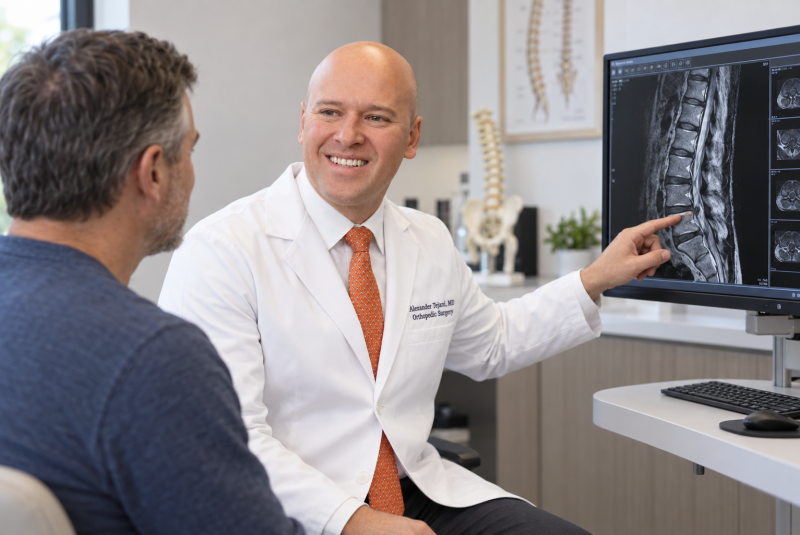
At Comprehensive Pain Solutions, the evaluation connects the location and behavior of your symptoms with your examination, prior treatment, and available imaging. If you already have an MRI, CT scan, or X-ray, the specialist can review that existing imaging in context rather than treating the wording of a report as a diagnosis by itself.
A plan may include physical therapy, changes to specific activities, or a focused home program. When symptoms continue or the source needs to be narrowed down, CPS places particular emphasis on image-guided injections, diagnostic blocks, and other interventional procedures. These treatments can deliver care directly to the suspected pain generator while avoiding the disruption and recovery associated with surgery.
Non-surgical does not mean one-size-fits-all, and it does not mean repeating the same treatment indefinitely. The right option depends on whether the problem involves inflammation, a compressed or irritated nerve, a painful joint, or another identifiable structure.
Conditions and Symptoms Treated Without Surgery

- Herniated discs that irritate a spinal nerve
- Sciatica and radiculopathy causing pain, tingling, or numbness in an arm or leg
- Spinal stenosis associated with nerve-related symptoms
- Facet joint irritation or arthritis in the neck or lower back
- Sacroiliac joint dysfunction or sacroiliitis
- Muscle-related pain and trigger points
- Pain arising from the shoulder, hip, knee, or another peripheral joint
Symptoms That May Benefit From Interventional Care
An interventional evaluation may be useful when pain has continued despite an appropriate course of therapy, when symptoms repeatedly return, or when it is still unclear which structure is responsible. Patterns that may warrant a closer look include:- Pain traveling from the neck into the shoulder, arm, hand, or fingers
- Pain traveling from the lower back into the buttock, thigh, calf, or foot
- Numbness, tingling, burning, or shooting pain along a nerve pathway
- Localized pain that worsens with extension, rotation, standing, or a specific movement
- Low back, buttock, or hip-area pain that may be coming from the SI joint
- Joint pain that makes walking, reaching, exercising, or daily activity more difficult
Non-Surgical Injection and Procedure Options
The word “injection” describes several different procedures. The location, purpose, and expected information vary from one injection to another. CPS uses fluoroscopy or ultrasound guidance when appropriate to place treatment precisely and confirm the target.
Epidural and Targeted Nerve Injections
Cervical, thoracic, or lumbar epidural steroid injections may be considered when inflammation around a spinal nerve contributes to radiating pain. A transforaminal epidural injection uses a more focused approach near a particular nerve root. These procedures are commonly discussed for symptoms related to a herniated disc, stenosis, sciatica, or cervical or lumbar radiculopathy.
An epidural injection does not remove a disc herniation or permanently enlarge a narrowed spinal canal. Its role is to reduce irritation around the nerve and create an opportunity for improved movement, participation in rehabilitation, or clearer treatment planning.
Facet Joint Injections and Medial Branch Blocks
Facet joints connect the vertebrae and help guide spinal movement. When one or more of these small joints become painful, the discomfort may stay near the neck or lower back and worsen with extension or rotation. A facet joint injection targets the joint itself. A medial branch block targets the small nerves that carry pain signals from the joint.
A medial branch block is often used diagnostically. If the expected pain improves during the test period, that response helps support the facet joint as the source and may lead to a discussion about radiofrequency ablation. Radiofrequency ablation uses controlled energy to interrupt selected pain signals for an extended period; the duration of improvement varies by patient.
Sacroiliac and Peripheral Joint Injections
The sacroiliac joints connect the lower spine and pelvis. SI joint pain can resemble a lumbar spine or hip problem because it may be felt in the low back, buttock, hip area, or upper leg. An image-guided SI joint injection can place treatment within the joint and may also help determine whether that joint is responsible for the symptoms.
CPS also performs image-guided injections for peripheral joints. Ultrasound or fluoroscopy can help the specialist reach the intended area while avoiding a generalized approach to joint pain.
Trigger Point, Nerve Block, and Advanced Interventional Procedures
Trigger point injections may be used for painful, tight areas of muscle. Intercostal nerve blocks may be considered for selected pain patterns involving the nerves between the ribs. The exact procedure depends on the anatomy and the way symptoms behave.
When standard injections are not enough, selected patients may be evaluated for other minimally invasive pain procedures, such as minimally invasive lumbar decompression (MILD), percutaneous lumbar discectomy, interspinous spacer placement, or a spinal cord stimulator trial. These procedures address different problems and are not interchangeable. A specialist determines whether any of them fits the diagnosis, imaging, and previous response to care.
What to Expect From Non-Surgical Treatment at CPS

The first appointment is used to understand where the pain begins, where it travels, what triggers it, and what has already been tried. Your specialist may assess strength, sensation, reflexes, range of motion, or the way specific movements reproduce symptoms. Existing MRI, CT, or X-ray images are reviewed when relevant.
If you have already received a diagnosis or recommendation elsewhere, a second opinion and MRI review can help determine whether the imaging finding actually matches your symptoms and whether a more targeted non-surgical option remains available. Bring or send the imaging you already have so the specialist can review it alongside your symptoms and treatment history.
The Procedure Is Selected for a Specific Target
Once a likely source is identified, your specialist explains the purpose of the recommended procedure, what structure will be targeted, how image guidance will be used, and what the response may tell us. Some procedures are primarily therapeutic. Others have both diagnostic and therapeutic value.
The expected timeline differs by procedure. Some patients notice a temporary change soon after an injection, while the intended effect may develop over several days. You will receive procedure-specific preparation and aftercare instructions, including any temporary activity limitations and the symptoms that should prompt a call.
Your Response Helps Guide the Next Step
Follow-up is not limited to asking whether the pain is “better.” The location and degree of improvement, how long it lasts, and what you can do more comfortably all provide useful information. A strong but temporary response may support the diagnosis and point toward another targeted procedure. Little or no response may suggest that the suspected structure was not the main source and that the plan should be reconsidered.
When a Spine Surgery Consultation May Be Appropriate
Many patients can continue with non-surgical care. A spine surgery consultation may become appropriate when imaging identifies a correctable structural problem, neurological function is worsening, or symptoms continue to limit daily life despite well-matched conservative and interventional treatment. Consultation does not commit you to surgery; it clarifies whether surgery is likely to offer a benefit that another injection cannot.
CPS brings pain management and spine specialists into one continuum, making it easier to adjust the plan as the diagnosis becomes clearer.
Request an appointment to discuss non-surgical treatment options at one of six New Jersey locations.
Frequently Asked Questions About Non-Surgical Treatment
What non-surgical treatments does CPS offer?
CPS offers image-guided epidural and transforaminal injections, facet joint injections, medial branch blocks, SI and peripheral joint injections, trigger point injections, selected nerve blocks, radiofrequency ablation, and other interventional procedures when appropriate. The recommended option depends on the suspected source of pain.
Do injections only mask pain?
Not necessarily. Some injections are used to reduce inflammation around an irritated nerve or painful joint. Others also provide diagnostic information. The location, amount, and duration of your response can help confirm or challenge the suspected pain source and guide the next step.
Are spine and joint injections image-guided?
CPS uses fluoroscopy or ultrasound guidance when appropriate to confirm the target and improve procedural precision. The type of guidance depends on the anatomy and procedure.
Do I need an MRI before non-surgical treatment?
Not every patient needs the same imaging. Existing MRI, CT, or X-ray studies can be helpful when symptoms suggest a structural spine or joint problem. Your specialist determines whether the imaging you already have is sufficient or whether additional evaluation is appropriate.
How long does an injection last?
The response varies by diagnosis, procedure, and patient. Improvement may be brief, may last for weeks or months, or may not occur if the targeted structure is not the main source. CPS uses both symptom change and functional improvement when deciding what to do next.
Can non-surgical treatment help me avoid spine surgery?
Some patients improve enough to continue without surgery. For others, a targeted procedure provides useful diagnostic information but symptoms eventually require surgical evaluation. The goal is to use the least invasive treatment that reasonably fits the condition, not to delay necessary surgery or recommend it prematurely.
When should I see a pain management specialist?
Consider an evaluation when pain persists despite therapy or activity changes, travels into an arm or leg, repeatedly returns, or remains difficult to explain. A specialist can review the full pattern and determine whether an injection or another targeted procedure is appropriate.
Does non-surgical treatment mean I will never need surgery?
No. Non-surgical care may resolve or manage many conditions, but it cannot correct every form of severe nerve compression, instability, or structural damage. If symptoms and imaging point to a problem better addressed surgically, CPS can help coordinate the appropriate consultation.