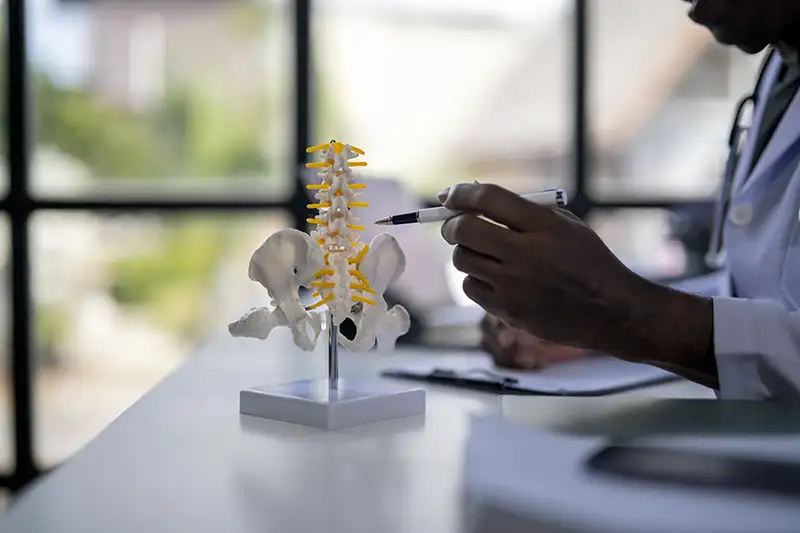
Pain has a way of narrowing everything. It can affect how you move, how you think, and how you go about your day. By the time most patients come in, they’ve already tried to address it. They’ve gone through therapy, taken medication, and in some cases, had procedures. And still, something doesn’t feel resolved.
We don’t begin with a treatment plan. We begin with a conversation.
We take the time to understand what has changed, what has remained consistent, and what has helped, even temporarily. Those details often matter more than a checklist.
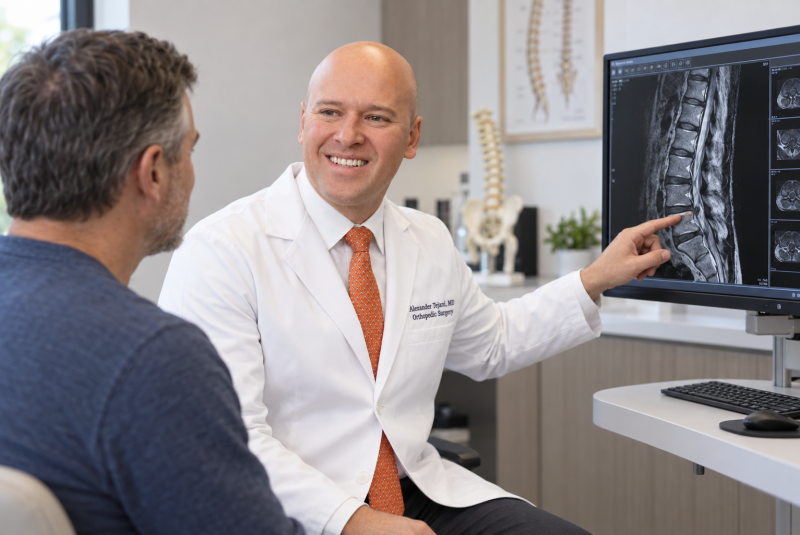
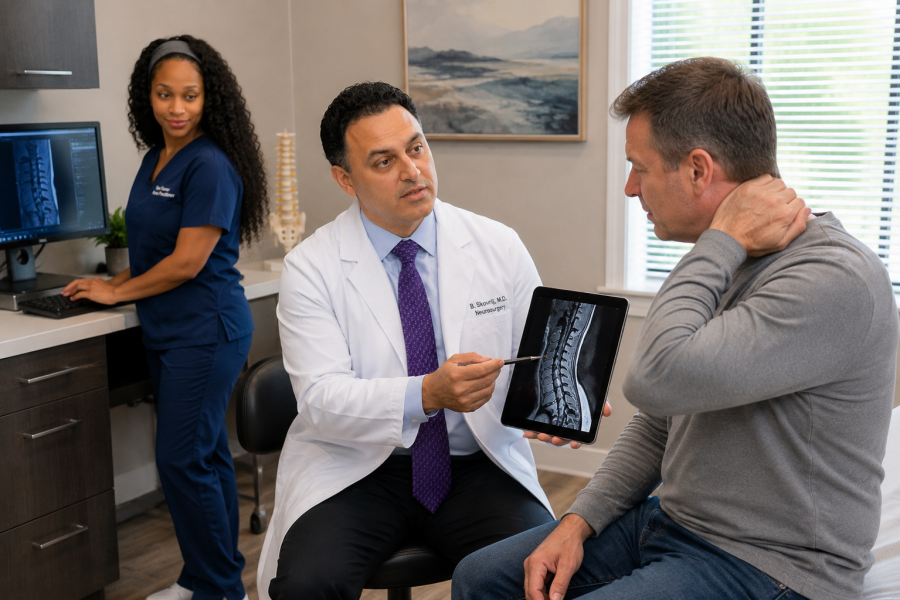
From there, we look at the full picture. That includes your symptoms, how your body is moving, and any imaging that’s available. The goal is not to confirm what’s already been assumed, but to understand what may have been overlooked.
There isn’t a single path forward for every patient. Some require more time with non-surgical care. Others may need a different level of evaluation. Many fall somewhere in between.
Our role is to help make sense of that process and guide you in the right direction, without rushing decisions or repeating approaches that haven’t worked.
Focused on Spine, Nerve, and Joint Conditions
Board-Certified Pain & Spine Specialists
Treatment Based on Findings, Not Assumptions
Take the Next Step Toward Understanding Your Pain
If your symptoms haven’t improved, it’s time to look at them differently. Our focused evaluation can help determine what direction makes sense next.