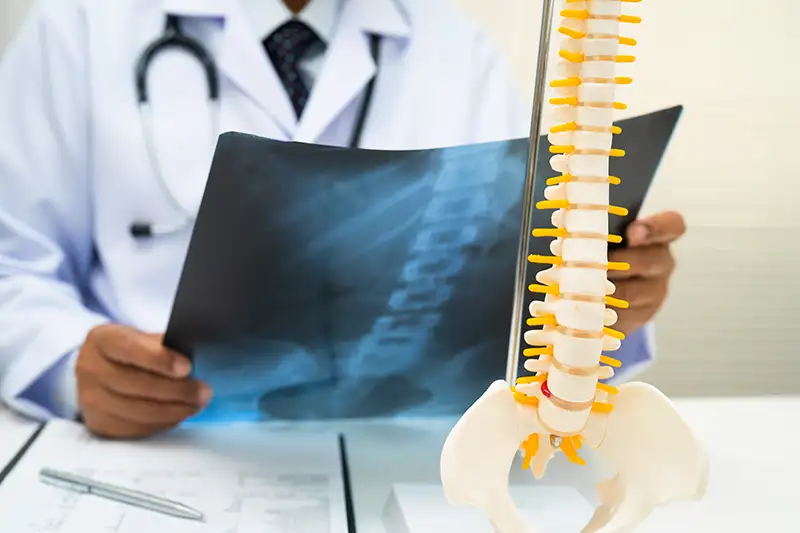

What Is a Pinched Nerve?
“Pinched nerve” is the everyday name for a nerve that has become compressed or irritated by nearby tissue. In the spine, the problem often occurs where a nerve root branches away from the spinal cord and exits through a small opening between the vertebrae.
When the affected nerve is in the neck, the medical term is often cervical radiculopathy. When it is in the lower back, it may be called lumbar radiculopathy. Sciatica is a familiar form of lumbar nerve pain that travels through the buttock and leg. These terms describe the nerve pattern; they do not, by themselves, identify what is pressing on or inflaming the nerve.
A nerve does not need to be visibly flattened to cause symptoms. Chemical inflammation around a disc or nerve root can also create pain. That is why pinched nerve treatment should be based on the symptoms, neurological examination, and imaging together.
Many spinal nerve symptoms improve with time and non-surgical care. Persistent pain, weakness, or loss of function deserves a more focused evaluation by a spine and pain specialist.
Pinched Nerve Symptoms in the Neck or Back

- Burning, electric, or shooting pain
- Tingling or a pins-and-needles sensation
- Numbness or reduced sensation
- Weakness in an arm, hand, leg, or foot
- Pain that changes with position or movement
What Causes a Pinched Nerve and How Is It Diagnosed?
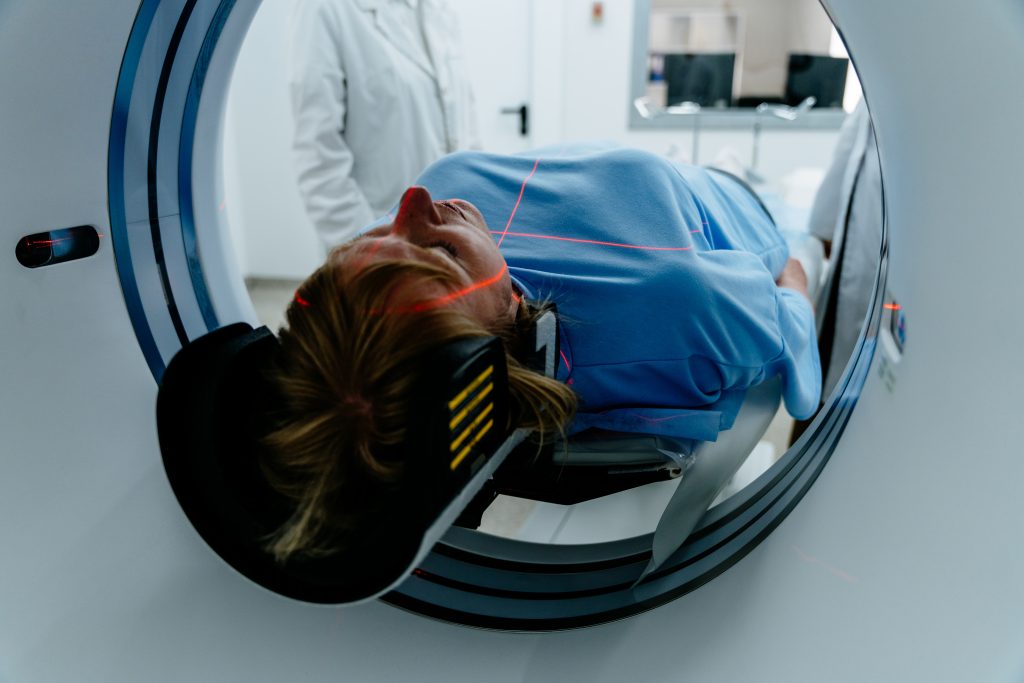
- Imaging review. MRI can show discs, nerve roots, the spinal cord, and areas of narrowing. X-rays or CT may add detail about alignment, bone spurs, or bony narrowing. An abnormality is most meaningful when it appears at the correct level and on the correct side to explain the symptoms and examination findings.
- Additional testing. Electromyography and nerve conduction studies may be useful when the source remains uncertain or when a nerve could be affected elsewhere in the body. A targeted injection may sometimes provide both treatment and information about whether a particular nerve is driving the pain.
Pinched Nerve Treatment Options
- Conservative care. Activity changes, physical therapy, and appropriate medication may reduce irritation, restore movement, and give the nerve time to recover. The plan should be adapted when a movement clearly worsens weakness or radiating pain.
- Injection-based treatment. Epidural steroid or transforaminal injections may place anti-inflammatory medication near the affected nerve. These procedures do not remove a disc herniation or widen a narrowed canal, but they may reduce inflammation and pain enough to improve function or support rehabilitation. Other targeted pain management procedures may be considered when the diagnosis and imaging support them.
- When a spine surgery consultation is appropriate. A surgical evaluation may be recommended when compression remains clearly defined and symptoms continue despite appropriate care, or when weakness, spinal cord symptoms, or loss of function is significant or progressive. Surgery is aimed at correcting the structural cause; the procedure depends on what is compressing the nerve and whether the spine is stable.
Frequently Asked Questions About Pinched Nerves
What does a pinched nerve feel like?
A pinched nerve may feel like burning, shooting, or electric pain that travels into an arm or leg. Tingling, numbness, and weakness can occur in a pattern linked to the affected nerve. Symptoms may change with neck, back, arm, or leg position.
Does a pinched nerve show up on an MRI?
MRI can show a disc herniation, narrowing, or another structure affecting a spinal nerve. It does not prove that the finding is causing the symptoms. The level, side, and severity should match the symptom pattern and examination.
What causes a pinched nerve in the spine?
Common causes include a herniated or bulging disc, spinal stenosis, bone spurs, arthritis, degenerative disc changes, and inflammation around the nerve root. The cause can differ between the neck and lower back.
How is a pinched nerve treated?
Treatment may include activity modification, physical therapy, medication, epidural or targeted nerve injections, and other pain procedures. Surgery may be considered when a correctable structural problem causes persistent symptoms, significant weakness, or worsening neurological function.
When does a pinched nerve need surgery?
Surgery is not required for most pinched nerves. A consultation becomes more important when symptoms continue despite appropriate care, imaging confirms ongoing compression, weakness progresses, spinal cord function is affected, or pain and loss of function remain severe.
Is sciatica a pinched nerve?
Sciatica describes pain along the sciatic nerve pathway, usually caused by irritation or compression of a lumbar nerve root. A herniated disc and spinal stenosis are common causes, but not every leg symptom is sciatica.
When are pinched nerve symptoms urgent?
Seek urgent medical assessment for sudden or rapidly worsening weakness, loss of bowel or bladder control, numbness around the groin or saddle area, major changes in walking or balance, or severe symptoms after trauma.