What Is a Spine Second Opinion and MRI Review?
A spine second opinion is a focused consultation for someone who already has imaging, a diagnosis, or a recommended treatment but still has questions about what it means. The purpose is not to repeat the same appointment. It is to examine the full picture from another clinical perspective.
At Comprehensive Pain Solutions, the review includes more than the written MRI report. A specialist looks at the available images, where and how your symptoms occur, findings from your examination, and how you responded to previous care. Those pieces need to make sense together before a treatment recommendation can be considered reliable.
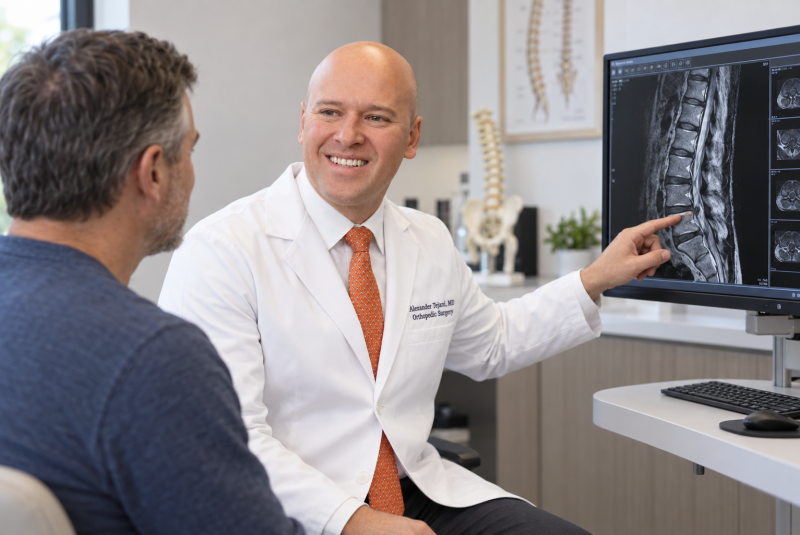
An MRI may identify disc changes, narrowing, arthritis, or other structural findings. Not every finding is responsible for pain, and the most prominent item in the report is not always the one that best explains your symptoms. The clinical question is whether the location and severity of the finding match what you are experiencing.
This appointment does not involve performing a new MRI, and it is not a replacement radiology report. It is a clinical evaluation that uses your existing imaging to help determine whether the current diagnosis and treatment direction fit your condition. If updated imaging or another test would provide important information, your specialist can explain why it may be appropriate.
When Should You Consider a Spine Second Opinion?
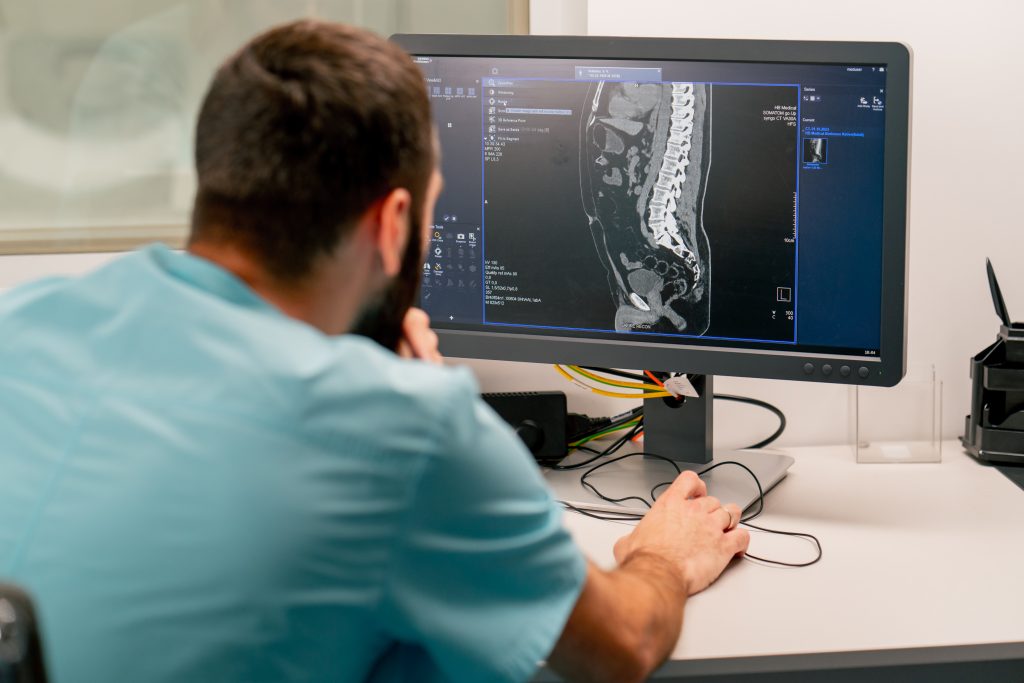
- You have been advised to consider an injection, procedure, or spine surgery
- Your MRI report sounds serious, but you are unsure whether the findings explain your symptoms
- Your pain, numbness, tingling, or weakness has continued despite treatment
- Different providers have given you different diagnoses or recommendations
- Symptoms have returned or changed after a previous spine procedure
- You want to understand whether non-surgical care remains reasonable
- You want more context before making a decision that could affect your mobility, recovery, or daily life
How Is Spine Surgery Performed?
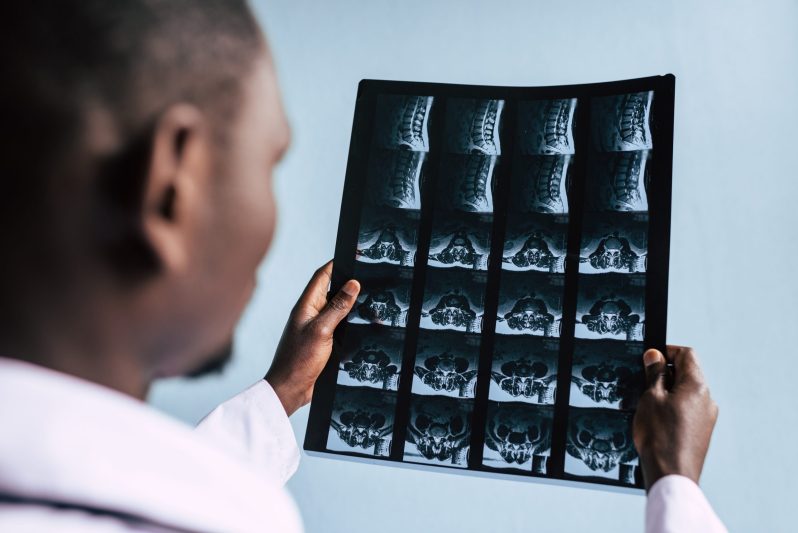
- Bring the actual images and report. If possible, bring the MRI images through the imaging center’s portal, a disc, or another digital format, along with the written radiology report. The report summarizes the study, but the images allow the specialist to examine the location and extent of the findings directly.
- Review what has already been tried. Physical therapy, medication, injections, prior surgery, and even treatments that helped only briefly can provide useful information. These responses help narrow down which structure may be contributing to the pain.
- Compare the findings with your symptoms. The specialist considers where the pain begins, where it travels, what movements affect it, and whether there is numbness, weakness, or a change in function. Your strength, sensation, reflexes, movement, or balance may also be evaluated when relevant.
- Discuss what the findings change. The goal is to explain which MRI findings appear meaningful, which may be incidental, and whether the current recommendation addresses the problem your symptoms suggest.
What Happens After Your Second-Opinion Evaluation?
- Continuing observation or conservative care when the findings do not require intervention
- A more targeted pain management approach to identify or treat a suspected pain source
- Additional imaging or diagnostic testing when important information is missing or outdated
- A spine surgery consultation when a structural problem is clearly affecting a nerve, the spinal cord, stability, or function
- A different specialist evaluation when the MRI does not adequately explain the symptoms
Frequently Asked Questions About Spine Second Opinions and MRI Reviews
Do I need a new MRI before scheduling a second opinion?
Not necessarily. If your existing MRI is recent enough and still reflects your current symptoms, it may provide the information needed for the consultation. Updated imaging may be recommended if your symptoms have changed, the study is outdated, or the available images do not answer the clinical question.
Should I bring the MRI images or only the written report?
Bring both whenever possible. The report provides the radiologist’s summary, while the actual images allow the specialist to review the anatomy and compare the findings with your symptoms.
Can I get a second opinion if spine surgery has been recommended?
Yes. A second opinion can help confirm whether the identified problem is likely to respond to surgery, whether another approach should be tried first, and what the proposed procedure is intended to correct.
Do I have to be considering surgery to request an MRI review?
No. Patients also request second opinions when pain management procedures have been recommended, previous treatments have not worked, or the diagnosis remains unclear.
Is this the same as getting a second radiology report?
No. CPS provides a clinical specialist evaluation that considers your MRI together with your symptoms, examination, and treatment history. It does not replace a formal interpretation from a radiologist. If a formal reread or another imaging study is needed, your specialist can discuss that recommendation.
Can CPS review imaging after a previous spine surgery?
Yes. Previous imaging, updated imaging, operative reports, and the timing of your symptoms can help the specialist evaluate whether pain is related to the original condition, a new spinal level, recurrent nerve compression, instability, or another issue. When another operation has been proposed, a revision spine surgery evaluation may help clarify whether additional surgery is appropriate.
What if my MRI does not explain how much pain I am having?
That is an important reason to seek another evaluation. Pain may come from a nerve, joint, disc, muscle, or another structure that is not fully explained by the most noticeable MRI finding. Your specialist may recommend additional evaluation or a targeted diagnostic procedure rather than assuming the scan tells the entire story.