What Is Revision Spine Surgery?
Revision spine surgery is a procedure performed after a prior spinal operation when symptoms continue, return, or change in a way that suggests the underlying problem has not been fully resolved.
We don’t approach this as a repeat of the same surgery. We treat it as a separate phase of care. The first step is identifying what is actually driving the current symptoms through a detailed review of prior imaging, surgical history, and how the spine has changed over time.
In many cases, the initial surgery addressed a specific structural issue. The disc may have been removed, the nerve may have been decompressed, or the spine may have been stabilized at a single level. At the time, that was the correct target.
What changes is everything around it.
Over time, the spine adapts. New stress can develop at nearby levels. Alignment can shift. The way forces move through the spine is no longer the same as before the original procedure.
Revision spine surgery focuses on correcting the specific issue identified during that evaluation. The approach is based on what is found, not on the fact that a prior surgery occurred.
Why Is Revision Spine Surgery Performed?

Revision spine surgery is considered when persistent symptoms can be traced to a specific structural or neurological cause that has not responded to prior treatment.
This may include:
- Residual or recurrent nerve compression, where a disc, bone, or surrounding tissue continues to place pressure on a nerve root
- Scar tissue formation (epidural fibrosis), which can affect nerve mobility and contribute to ongoing pain
- Adjacent segment changes, where levels above or below a prior surgery take on increased mechanical stress
- Spinal instability, either pre-existing or developing after the initial procedure
- Hardware-related issues, including positioning, loosening, or localized irritation
In some cases, the issue is not a failure of the procedure itself, but a reflection of how complex spinal conditions can be. Pain may have multiple contributors, and those contributors can evolve over time.
Before any recommendation is made, imaging, prior surgical reports, and symptom patterns are reviewed together to determine whether revision surgery is appropriate or whether a non-surgical approach is more suitable.
How Is Revision Spine Surgery Performed?
Revision spine surgery is planned differently from an initial procedure because the anatomy has already been altered.
Scar tissue, prior instrumentation, and changes in spinal alignment all influence the approach. For that reason, imaging plays a central role in pre-surgical planning.
Depending on the underlying issue, the procedure may involve:
- Removing or adjusting existing hardware
- Relieving nerve compression through decompression techniques
- Stabilizing the spine if instability is present
- Addressing adjacent levels when degeneration has progressed beyond the original surgical site
Whenever possible, minimally invasive techniques are used to reduce disruption to surrounding tissue. However, the exact approach depends on what needs to be corrected.
The goal is precision. Each step is guided by imaging and prior surgical history, rather than a standardized method.
What To Expect After Revision Spine Surgery
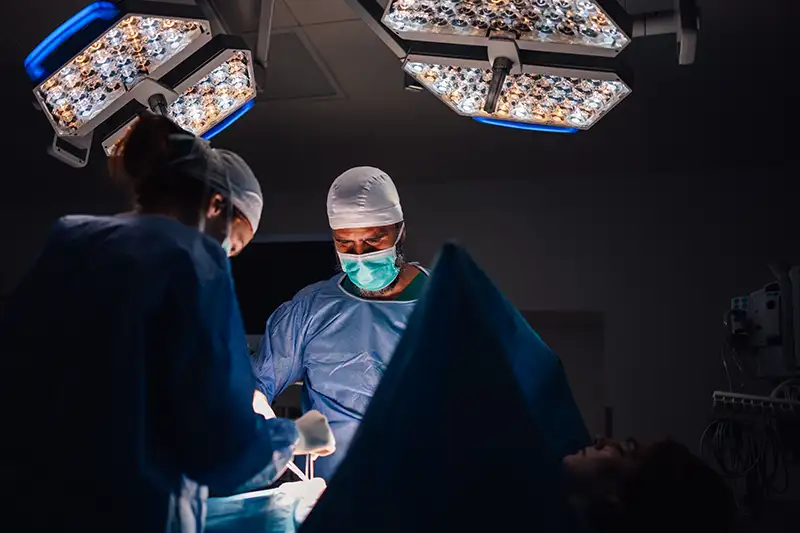
Recovery after revision spine surgery varies depending on the complexity of the procedure and the condition being treated.
In general:
- Early movement is encouraged, often within a short time after surgery
- Some post-procedure discomfort is expected, particularly around the surgical site
- Nerve-related symptoms may take time to improve as inflammation resolves
Recovery is not immediate. In many cases, improvement follows the same pattern as the original symptoms, gradually decreasing as pressure on the nerve is relieved and function returns.
Patients who have undergone prior spine surgery often have a more individualized recovery plan. Follow-up care, activity progression, and symptom monitoring are all adjusted based on how the spine responds.
The goal is not just short-term relief, but a more stable long-term outcome.
Frequently Asked Questions About Revision Spine Surgery
Does this mean my first surgery failed?
Not necessarily. Surgery can be performed correctly and still not resolve all sources of pain. This condition reflects the complexity of spine-related symptoms rather than a single outcome.
How soon can revision surgery be considered?
It depends on recovery and symptom progression. Some patients experience persistent pain early, while others develop symptoms months or years later.
Will I need another surgery?
Not always. Many patients are managed with non-surgical or interventional treatments. Surgery is considered only when there is a clear structural reason to proceed.
What is spinal cord stimulation, and when is it used?
It is a treatment that modifies how pain signals are processed. It is often considered when pain persists without a clear structural issue that surgery would correct.
Can imaging show what went wrong?
In many cases, yes. Updated imaging helps identify structural changes, nerve involvement, or other contributing factors.
What should I bring to my appointment?
Prior imaging, surgical reports, and a timeline of symptoms are all helpful in building a complete picture.